


🐩 Are Poodles Easy to Train? The Honest Truth Most People Only Realise Later
- Nick Vaughan-Smith
- Apr 1
- 5 min read

Updated: 3 days ago
🚨 Quick Answer
Are Poodles easy to train?
Yes — but not in the way most people expect.
They learn quickly, recognise patterns fast, and respond well to structure… but they’re also highly aware, mentally active, and very responsive to inconsistency.
Which means training doesn’t fail because they don’t understand.It fails because the pattern isn’t clear.
👉 If you’re still exploring the breed, start with the 👉 Complete Poodle Guide (Hub) — it gives full context on behaviour, temperament, and daily life.
If you’re a proper Poodle person, you already know—it’s not just about the dog, it’s the energy. Clean, sharp, a little bit superior. Doggy Styles Inc captures that in minimalist poodle tote bags and apparel and poodle women’s t-shirts, hoodies and sweatshirts—designed with that same quiet confidence.

❗ Most People Get This Slightly Wrong
The assumption is simple:
Smart dog = easy training.
And on the surface, that’s true.
Poodles pick things up quickly.They respond fast.They often outperform expectations early on.
But what people don’t expect is this:
They don’t just learn commands.They learn systems.
They notice:
when rules change
when responses are inconsistent
when behaviour gets rewarded (even accidentally)
And once they see that…
They start making decisions.
👉 This is why intelligence alone doesn’t guarantee easy training — see 👉 Poodle Temperament Explained
🧠 How Poodles Actually Learn
Poodles learn through:
pattern recognition
repetition
outcome association
Not force.Not volume.Not intensity.
They’re constantly observing:
your tone
your timing
your reactions
your routines
And over time, they build a mental model of:
👉 “What leads to what?”
If that model is clear → behaviour becomes reliableIf that model is inconsistent → behaviour becomes selective
📊 Poodle Training Reality (At a Glance)
Trait | Reality
Trainability | ⭐⭐⭐⭐⭐
Consistency Required | ⭐⭐⭐⭐⭐
Response to Harsh Correction | ⭐☆☆☆☆
Response to Routine | ⭐⭐⭐⭐⭐
Attention Span | ⭐⭐⭐⭐☆

🏠 The First Few Weeks (Where Expectations Shift)
The early days feel easy.
They respond quickly.They follow commands.They seem highly cooperative.
Then something changes.
They:
start ignoring commands occasionally
respond sometimes, not always
test boundaries subtly
This is where most owners think:
👉 “They’re being stubborn.”
But what’s actually happening is this:
They’re testing consistency.
If a command doesn’t always lead to the same outcome…
It stops being a rule.
👀 Real Owner Experience (The Moment That Changes Everything)
There’s usually a very specific moment where this clicks.
You give a command they already know — something simple, like “sit.”
They look at you.Pause for half a second.
And in that pause, you can actually see it:
They’re not confused.They’re not distracted.
They’re deciding.
Then they either do it…or don’t.
That’s the moment most owners realise:
👉 This isn’t about teaching the command anymore.👉 It’s about whether the rule is consistent enough to follow every time.
Once you see that, training stops feeling random — and starts feeling logical.
Why Do Poodles Ignore Commands?
Poodles don’t ignore commands because they don’t understand them.
They ignore commands when:
• the outcome isn’t consistent• the reward timing is unclear• the pattern changes
In most cases, they are making a decision — not struggling to learn.
⚠️ What Actually Makes Training Harder
Most training issues don’t come from the dog.
They come from mixed signals.
For example:
Giving a command but not reinforcing it every time
Rewarding behaviour sometimes, ignoring it others
Reacting emotionally instead of consistently
From the dog’s perspective, this creates uncertainty.
And uncertainty leads to:
selective listening
delayed responses
inconsistent behaviour
Left unclear, this is where “occasional ignoring” quietly becomes a long-term habit.
👉 This is why many “training problems” are actually pattern problems — see 👉 Poodle Pros & Cons (Honest Breakdown)
🧠 What Actually Works (Real-World, Not Theory)
1. Consistency Over Intensity
Same command.Same tone.Same outcome.
Every time.
That’s what builds clarity.
2. Short, Clear Interactions
Poodles don’t need long sessions.
They need clear ones.
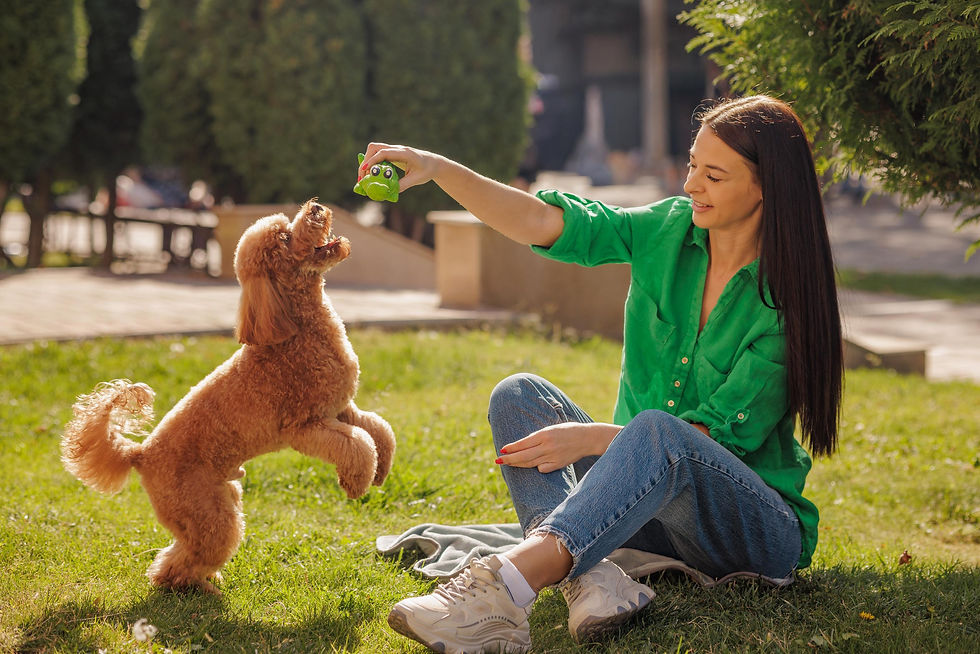
5–10 minutes of focused training is often more effective than longer sessions with inconsistent signals.
3. Timing Matters More Than Reward Type
Treats, praise, attention — all work.
But timing is everything.
If the reward is late…The learning weakens.
4. Tone > Volume
Raising your voice doesn’t improve results.
It usually creates confusion or reactivity.
A calm, consistent tone builds far more understanding.
This pattern-based learning style is widely recognised in modern dog training, where consistency and timing are considered more important than repetition alone.
🔁 The Pattern That Changes Everything
At first, training feels inconsistent.
Then patterns appear.
You notice:
the same behaviour follows the same situation
the same command works when delivered consistently
the same inconsistency creates the same confusion
And that’s when everything shifts.
Because once you understand the pattern:
behaviour becomes predictable
training becomes easier
responses become reliable
⚖️ Expectation vs Reality
Expectation:A smart dog will follow commands easily
Reality:A smart dog will respond well — but only with consistency
Expectation:Training will be quick and effortless
Reality:Training is fast — but only when patterns are clear
Expectation:They’ll “just understand”
Reality:They understand — but only what is repeated consistently
👉 For how this plays out in family life, see 👉 Are Poodles Good Family Dogs?
⚠️ When Training Feels Difficult
Training usually becomes frustrating when:
routines change frequently
different people use different commands
expectations aren’t consistent
the dog is mentally under-stimulated
This doesn’t mean the dog is difficult.
It means the system isn’t clear.
🧠 What Most Owners Realise Over Time
There’s a consistent shift:
At first:“I’m training the dog.”
Later:“The dog is responding to my patterns.”
Eventually:“Training improved when I became consistent.”
That’s the moment everything clicks.
💡 One Thing That Surprises People Most
It’s not how fast they learn.
It’s how quickly they notice inconsistency.
What feels like “selective listening”…
Is usually selective clarity.

How do you train a Poodle effectively?
The most effective way to train a Poodle is through consistent commands, clear routines, and timely rewards. Short, focused sessions work best, as Poodles respond quickly when patterns are easy to recognise.
🏁 The Verdict
Poodles are absolutely easy to train.
But not because they’re simple.
Because they’re:
intelligent
observant
pattern-driven
Get the pattern right…
And training becomes far easier than most people expect.
💭 Final Thought
Training a Poodle isn’t about control.
It’s about clarity.
Once they understand what leads to what…
They don’t just follow commands.They start anticipating them.
👉 If you appreciate that level of intelligence and awareness, you’ll probably enjoy our Poodle collection ....Understated. Considered. Very Poodle.Shop poodle tote bags, t-shirts and hoodies → or explore the full poodle collection
🔗 Explore More Poodle Content
❓ FAQ: Poodle Training
Are Poodles easy to train?Yes — they learn quickly, but consistency is essential for reliable behaviour.
Why does my Poodle ignore commands?Usually due to inconsistent reinforcement rather than lack of understanding.
Do Poodles respond well to treats?Yes, but timing matters more than the reward itself.
How long should training sessions be?Short — typically 5–10 minutes works best.
Can older Poodles be trained?Yes. They can learn at any age, though habits may take longer to reshape.


Comments