


🐶 Why Are Bulldogs So Lazy? What You Need to Know
- Nick Vaughan-Smith
- Apr 9
- 4 min read

Updated: Apr 19
🚨 Quick Answer
Why are Bulldogs so lazy?
They’re not — at least not in the way people think.
Bulldogs don’t lack energy.
👉 they manage it differently
What looks like laziness is actually:
👉 energy conservation + structural limitation + selective engagement
And once you understand that…
👉 their behaviour stops feeling confusing👉 and starts feeling completely predictable
👉 If you’re exploring the breed fully, start with the Complete Bulldog Guide (Hub) to see how energy fits into daily life.
Bulldogs don’t burn energy impulsively. They use it carefully — steady, deliberate, and always within their limits.
Doggy Styles Inc channels that into minimalist bulldog tote bags and apparel and bulldog women’s t-shirts, hoodies and sweatshirts—clean, modern pieces built around the Bulldog personality

❗ Most People Get This Completely Wrong
Most people assume:
👉 “Bulldogs are lazy dogs.”
But here’s the uncomfortable truth:
👉 they’re only “lazy” if you expect them to behave like high-energy breeds
Because Bulldogs aren’t built for:
sustained activity
reactive play
constant engagement
They’re built for:
👉 short bursts👉 controlled output👉 recovery
👉 This is rooted in their structure — see Bulldog Health Guide
📊 Bulldog Energy Reality
Trait | Reality |
Daily Energy | ⭐⭐☆☆☆ |
Burst Activity | ⭐⭐⭐☆☆ |
Endurance | ⭐⭐☆☆☆ |
Recovery Speed | ⭐⭐⭐☆☆ |
Motivation | ⭐⭐⭐☆☆ |
👉 This ties directly into behaviour — see Bulldog Temperament Explained

🧠 The Real Trait: They Don’t Waste Energy
This is the defining difference.
Most dogs:
👉 expend energy → recover later
Bulldogs:
👉 assess energy → decide → then act
Which means:
they don’t chase everything
they don’t react instantly
they don’t overcommit
And from the outside…
👉 that looks like laziness
👉 In reality, it’s controlled behaviour — see Bulldog Training Guide
🎬 A Real-Life Micro Moment (Where “Lazy” Feels Real)
It’s 5:48pm.
You’ve decided:
👉 “we’ll go for a proper walk today”
Not long.
Just enough.
You grab the lead.
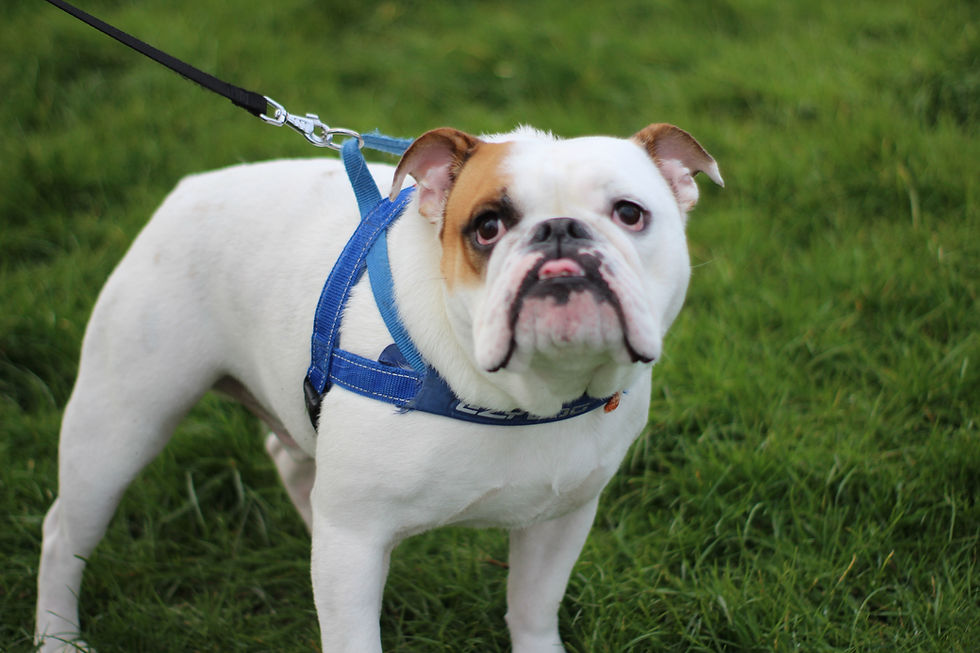
Your Bulldog looks at you.
Not excited.
Not uninterested.
Just… aware.
You clip it on.
Step outside.
They follow.
Slowly.
At first it feels normal.
Then:
They drift slightly behind.
You keep walking.
They stop.
Not dramatically.
Just… stop.
You turn.
They’re standing there.
Looking at you.
No distress.
No resistance.
Just… done.
You feel it immediately:
👉 “already?”
You look ahead.
You know the route.
You know this isn’t even halfway.
And this is the moment:
👉 “do I encourage… or just accept it?”
You call them.
They take a few steps.
Stop again.
Now it’s clear:
👉 this isn’t about stubbornness
👉 this is a limit
You turn back.
Walk home.
Shorter than planned.
Again.
And here’s the shift most people miss:
This isn’t random.
It happens:
at similar distances
at similar temperatures
at similar energy levels
Until one day you realise:
👉 this dog isn’t refusing
👉 it’s regulating
🔁 The Energy Pattern (Why It Feels So Consistent)
Bulldogs operate on:
Assess → Use → Stop → Recover
Not:
👉 go → push → adapt
Which means:
energy is finite
limits are fixed
behaviour is predictable
👉 This shows up across daily life — see Bulldog Pros & Cons (Honest Breakdown)
⚠️ The Part That Frustrates People
They Don’t Match Your Plan
You plan:
👉 longer walks👉 more activity👉 more engagement
They respond with:
👉 shorter effort👉 earlier stops👉 selective participation
They Don’t “Push Through”
Other dogs:
👉 keep going
Bulldogs:
👉 stop early
And that creates this subtle tension:
👉 “they could do more… if they wanted to”
But the truth is:
👉 they’re already at their limit
They Don’t React to Motivation the Same Way
toys don’t always work
excitement doesn’t always work
repetition doesn’t change limits
👉 This is where people mislabel them as stubborn
🧠 The Ownership Shift (Where It Finally Clicks)
At first:
👉 “They’re lazy.”
Then:
👉 “They don’t want to do it.”
Then:
👉 “They always stop at the same point.”
And that’s the moment everything changes.
Because now you see it:
👉 it’s not attitude
👉 it’s structure

🏠 What Actually Works (Instead of Fighting It)
1. Short, Controlled Activity
2. Predictable Routines
3. Respecting Limits
4. Not Forcing Output
👉 This becomes especially important in family environments — see Are Bulldogs Good Family Dogs?
⚖️ Expectation vs Reality
Expectation:👉 Lazy dog
Reality:👉 Energy-managed dog
Expectation:👉 Can do more with motivation
Reality:👉 Limited by structure
Expectation:👉 Needs pushing
Reality:👉 Needs understanding
👀 What Most Owners Realise Over Time
At first:👉 “They’re lazy.”
Then:👉 “They’re inconsistent.”
Eventually:👉 “They’re predictable.”
And once you see that:
👉 everything makes sense
💡 One Thing That Surprises People Most
It’s not how little energy they have.
It’s how precisely they regulate it.

🎯 The Verdict
Bulldogs aren’t lazy.
They are:
energy-efficient
structurally limited
behaviourally consistent
👉 If you understand that…
They become one of the easiest dogs to live with.
👉 If you fight it…
They feel frustrating.
💭 Final Thought
Bulldogs don’t lack energy.
They protect it.
And once you understand that…
👉 you stop expecting more
👉 and start working with exactly what they are
Calm presence. Quiet confidence. Built steady. Styled clean.
👉 Shop bulldog tote bags, t-shirts and hoodies → or explore the full bulldog collection
🔗 Explore More Bulldog Content (Cluster)
❓ FAQ: Bulldog Energy & Behaviour
Are Bulldogs really lazy?No — they regulate energy rather than spending it freely.
Why does my Bulldog stop during walks?Because they’ve reached a physical or energy limit.
Can Bulldogs build stamina?Slightly — but structural limits remain.
Do Bulldogs need exercise?Yes — but in short, controlled amounts.
Is laziness linked to health?Yes — breathing and heat sensitivity directly affect energy.
Can training change their energy levels?No — but it can improve structure and consistency.
Do Bulldogs sleep more than other dogs?Yes — they tend to rest more due to lower energy output.
Why does my Bulldog seem tired so quickly?Because of lower endurance and breathing efficiency.
Are Bulldogs suitable for active owners?Not usually — they suit slower-paced lifestyles.
Can Bulldogs become more energetic with training?Only slightly — their physical structure sets limits.


Comments