


Bulldog Training Guide: What Actually Works?

Updated: Oct 9

Quick Answer
Bulldogs can be easy to train — but not in the way most people expect. They don't respond to urgency, repetition, or pressure the way more reactive breeds do. They respond to consistency, timing, and clear patterns. Try to train them like a high-energy dog, and that's where the frustration starts.
If you’re new to the breed, start with:
👉 Complete Bulldog Guide (Hub) to understand how training fits into daily life.
Bulldogs don’t rush to follow commands. They decide when something is worth responding to — steady, deliberate, and completely consistent.
Are Bulldogs Easy to Train? (Simple Answer)
Bulldogs are trainable — they just require a different approach. They respond well to consistency, patience, and clear timing. They respond poorly to repetition, pressure, and urgency. The mistake most people make isn't that they can't train a Bulldog; it's that they're using the wrong signals.
Doggy Styles Inc channels that into minimalist bulldog tote bags and apparel and bulldog women’s t-shirts, hoodies and sweatshirts—clean, modern pieces built around the Bulldog personality
👉 Shop Bulldog tote bags, women’s t-shirts, sweatshirts and hoodies
👉 or explore the full BULLDOG COLLECTION
Most People Get This Slightly Wrong
Most people assume training is about repetition and consistency — and that's true. But with Bulldogs, something else matters more: timing and expectation. They don't respond command to instant action. They respond command, pause, assess, decide, act. If you don't understand that gap, it feels like they're ignoring you.
This is rooted in temperament:
How to Train a Bulldog (What Actually Works)
Use clear, single commands. Allow time for a response — don't rush it. Reinforce the completed behaviour, not the attempt. And avoid repeating the same instruction before they've had a chance to process the first one.
Training a Bulldog is less about control and more about consistency and timing.
Bulldog Training Snapshot
Trait | Reality |
Trainability | ⭐⭐⭐☆☆ |
Response Speed | ⭐⭐☆☆☆ |
Consistency | ⭐⭐⭐⭐☆ |
Motivation | ⭐⭐⭐☆☆ |
Independence | ⭐⭐⭐☆☆ |
Key Bulldog Training Traits
Slower response time than reactive breeds
High consistency once patterns are learned
Sensitive to tone changes
Low tolerance for repetition
Strong pattern recognition.
These traits explain why Bulldogs feel difficult early on — but highly predictable over time.
For a full ownership picture:

The Real Problem: You’re Expecting Speed
This is where most training breaks down. You give a command. You expect an immediate response. When it doesn't come, you repeat it, change your tone, apply pressure — and without realising it, you break the pattern. Because Bulldogs don't respond to urgency. They respond to clear, consistent sequences.
A lot of this is linked to how their energy works:
Where Training Goes Wrong
It's 7:04pm. You're in the kitchen, your Bulldog near the doorway. You say it: "Come." Nothing. They heard you — you know they did. You wait. One second, two, three. Still nothing.
You say it again, slightly firmer. They look at you. That's it. No movement, just eye contact. Now you're in that moment: do you say it again, or go and get them? You repeat it a third time, and there's a tone shift now — slight frustration creeping in. They stand, slowly, take a step, stop, look away.
Here's what actually happened. The first command was a clear signal. The second made it optional. The third broke the pattern entirely. From the dog's perspective, the rule changed mid-sequence.
That moment repeats daily — until you realise the issue isn't the dog. It's the inconsistency in the signal.
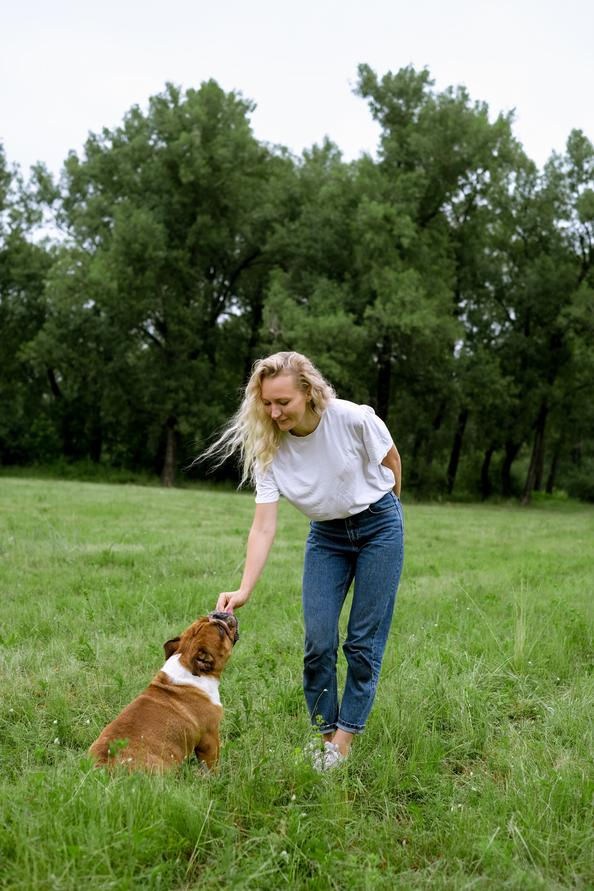
The Pattern That Actually Works
Bulldogs learn through a clear signal, time to process, follow-through, and reinforcement. Not repetition, not urgency, not pressure. One command. Wait. Allow the decision. Reinforce the completion. Over time, that sequence becomes consistent — and the training starts to work.
Where Most Owners Go Wrong
Repeating Commands
Every repeat weakens the signal. The dog learns: “I don’t have to respond immediately”
Changing Tone Too Quickly
Going from calm → frustrated: breaks consistency
Expecting Motivation That Isn’t There
Bulldogs don’t always:
chase rewards
react to excitement
respond to urgency
This is where people feel stuck
Not Accounting for Physical State
Heat, breathing, comfort. If something feels off physically response drops instantly.
👉 See Bulldog Health Guide
The Ownership Shift (Where It Starts Working)
At first it feels like they're not listening. Then just slow. Then you notice they respond the same way every time — and that's the shift. You stop repeating, start waiting, stay consistent. And suddenly, the responses improve.

What Actually Works (Real Training Rules)
1. Say It Once
2. Wait Longer Than Feels Comfortable
3. Don’t Fill the Silence
4. Reward Completion, Not Speed
These patterns apply across environments:
Expectation vs Reality
The expectation is quick, responsive training. The reality is deliberate and consistent. People think repetition builds learning; with Bulldogs, clarity does. Faster isn't better. Consistent is better.
What Most Owners Realise Over Time
At first it feels like training isn't working. Then like they're just slow. Eventually you realise they're consistent when you are — and that's when it clicks.
One Thing That Surprises People Most
It’s not that Bulldogs can’t learn.
It’s how reliably they respond once the pattern is clear.

The Verdict
Bulldogs are trainable — just not through speed. Through consistency, timing, and clear expectations. Adjust your approach, and they become one of the most predictable dogs to train.
Final Thought
Bulldogs don't rush to obey — they decide to respond. And once you understand that, training stops feeling frustrating and starts feeling structured.
Calm presence. Quiet confidence. Built steady. Styled clean.
That’s the energy behind the Bulldog range — minimalist apparel designed around the real ownership experience rather than idealised dog stereotypes.
👉 Explore Bulldog unisex t-shirts, sweatshirts and hoodies and tote bags
👉 or shop the full BULLDOG COLLECTION
Got a Bulldog who snores like a tractor or simply refuses to walk another step? Show us. Tag @doggystylesinc on Instagram or find us on Facebook at Doggy Styles Inc, and your dog could feature in a future post.
Continue Understanding the English Bulldog Breed
Here's a full cluster of links to help you fully understand how English Bulldog behaviour and ownership actually work in real life, these articles connect most closely to the
patterns above:
FAQ: Bulldog Training
Why does my Bulldog ignore commands?They don’t ignore — they delay while processing.
Are Bulldogs stubborn or just slow?Mostly slow and deliberate, not truly stubborn.
How long does it take to train a Bulldog?Longer than reactive breeds, but results are consistent.
What’s the biggest training mistake?Repeating commands and changing tone.
Do Bulldogs respond to treats?Sometimes — but consistency matters more than reward.
Does health affect training?Yes — discomfort reduces responsiveness immediately.
Can you train a stubborn Bulldog?Yes — but consistency works better than force or repetition.
What age should you start training a Bulldog?As early as possible, ideally during puppyhood.
Why does my Bulldog respond sometimes but not always?Because they rely on consistent patterns, not urgency.
Do Bulldogs need professional training?Not always — but guidance can help first-time owners


Comments