


Why Do Bulldogs Snore So Much? The Honest Truth About Bulldog Breathing, Sleeping & The Noises Owners Eventually Stop Hearing

Updated: Oct 9

Quick Answer
Bulldogs snore because of their physical structure. But most owners only understand what that actually means after living beside one at 2:13am while the dog sounds like an old diesel engine struggling emotionally through a blocked tunnel. That’s usually the real introduction to Bulldog ownership. Because Bulldogs rarely sleep quietly.
They:
snore
grunt
wheeze
sigh
snort
breathe dramatically
make strange dream noises
and occasionally sound deeply offended by their own nostrils
Then something strange happens. The noise stops feeling disruptive. It just becomes:the house.
If you’re still understanding the breed properly, start here:
People expect Bulldogs to snore a little. What they don’t expect is the sheer consistency of the soundscape: the breathing, the snorting, the dramatic exhaling, the emotional repositioning noises every time the dog rotates three centimetres during sleep.
Bulldogs don’t really “settle quietly.”
They collapse into comfort like exhausted Victorian men returning from war.
That strange combination of emotional presence, stubborn comfort and deeply committed sleeping is exactly what Doggy Styles Inc builds around in its minimalist Bulldog tote bags, t-shirts, sweatshirts and hoodies — clean, wearable designs inspired by the real ownership experience rather than novelty dog graphics or cartoon stereotypes.
Because Bulldog owners usually recognise the breed instantly in the details:the snoring, the emotional drama,the strange breathing sounds, the routines, and the feeling that the dog somehow manages to sound permanently inconvenienced by absolutely everything — including sleep itself.
👉 Shop Bulldog tote bags, women’s t-shirts, sweatshirts and hoodies
👉 or explore the full BULLDOG COLLECTION
Bulldogs are physically built to snore
This is the foundation underneath everything. Bulldogs are a brachycephalic breed, meaning they have shortened skull and airway structure.
That physical design affects:
breathing
airflow
sleeping
heat regulation
recovery
snoring intensity
Some Bulldogs genuinely sound louder asleep than other dogs do fully awake.

There’s usually:
snorting
wheezing
dramatic inhaling
twitching
deep sighing
strange little recovery noises
And occasionally one horrifying sound that makes the owner sit bolt upright in bed convinced the dog has briefly stopped functioning entirely. Then the Bulldog opens one eye. Looks annoyed. Goes back to sleep immediately. Most experienced Bulldog owners know that exact moment.
Snoring and breathing problems are not automatically the same thing
This matters. Because many owners initially treat every strange Bulldog noise as “normal Bulldog stuff.” Some of it is. Some of it absolutely isn’t. Experienced Bulldog owners become very good at recognising the difference between ordinary breed noise and genuine physical distress.
Especially around:
overheating
recovery breathing
airway strain
exhaustion
sleep discomfort

Bulldogs often become physically overwhelmed before they fully realise it themselves.
That’s one of the most misunderstood realities of the breed. Excitement masks discomfort. A Bulldog can look emotionally thrilled while physically struggling underneath. That’s why experienced owners pay close attention to:
recovery speed
breathing rhythm
temperature
pacing
overstimulation
The breed often pushes emotionally far beyond what its breathing system would naturally prefer. That’s also why many experienced owners eventually stop trying to create “tough Bulldogs” and instead focus on creating comfortable, physically balanced ones.
Bulldogs often snore louder after emotionally intense days
This surprises a lot of people. Because owners often assume snoring is purely physical.
It isn’t always. Bulldogs frequently breathe louder after:
exciting days
overstimulation
disrupted routine
emotional stress
heavy activity
too much social chaos
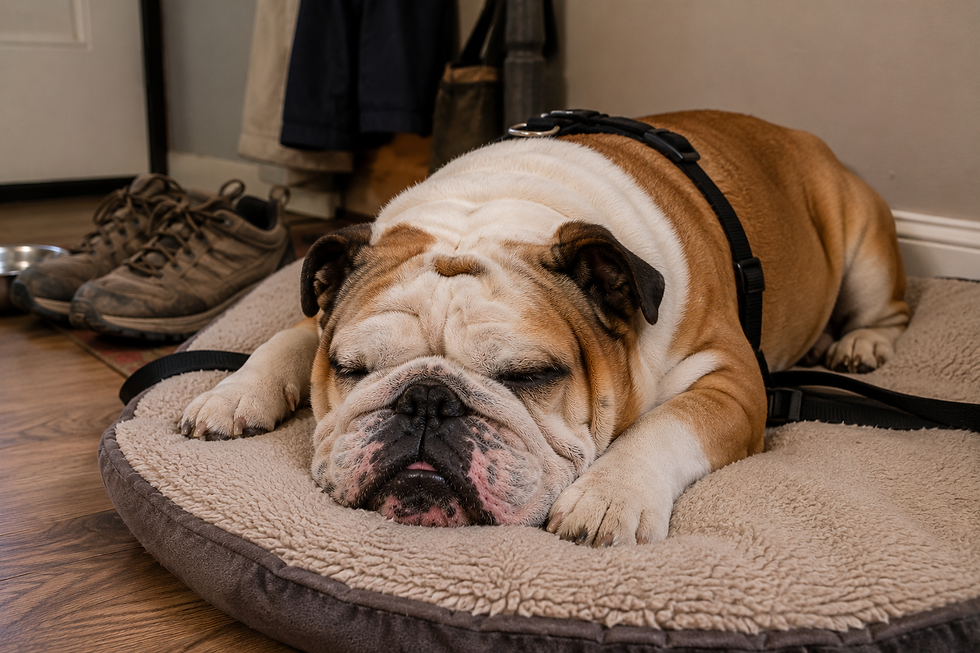
Bulldogs don’t gradually wind down emotionally. They tend to go from:fully invested in life to completely unconscious with very little transition in between. And the sleep often sounds like the body is still processing the day in real time. Little grunts. Dream twitching. Heavy breathing. Emotional sighing. Bulldogs sleep like they spent the entire day carrying emotional burdens nobody asked them to carry.
That emotional sensitivity is also why Bulldog temperament becomes much more layered once people truly understand the breed properly. Most experienced owners eventually realise Bulldogs are highly affected by routine, atmosphere and emotional stimulation around them.
Bulldogs become deeply attached to comfort and routine
This is where the breed becomes psychologically interesting. Because Bulldogs often build entire emotional systems around:
sleeping spots
household rhythm
favourite rooms
favourite people
bedtime routines
physical closeness
Some Bulldogs insist on sleeping in exactly the same location every night.
Others follow owners room to room before finally settling only once the household arrangement feels emotionally correct again.

Tiny behaviours reveal huge truths about the breed:
staring at owners before falling asleep
sighing dramatically when moved
refusing certain sleeping positions
becoming unsettled when routines change
sleeping pressed physically against people
Bulldogs rarely experience comfort casually. They attach emotionally to it.
That’s also why many Bulldogs struggle more than people expect when household rhythm suddenly changes. Once the breed becomes emotionally attached to familiar routine and comfort, disruption can affect behaviour surprisingly strongly.
Heat and weight change everything
This is one of the most important realities Bulldog owners eventually learn. Because Bulldogs are already working harder to breathe than many breeds naturally do.
Which means:
heat
humidity
excess weight
poor recovery
overexertion
..can worsen breathing and snoring significantly.

Bulldogs often continue emotionally long after their bodies would prefer them not to.
That’s why experienced owners become deeply protective of:
cool environments
recovery time
body condition
breathing quality
calm routine
The healthiest Bulldogs are usually not the hardest pushed. They’re the best regulated.
That also feeds into the health issues Bulldog owners tend to notice over time.
It’s all connected
Once you understand the breed properly, most Bulldog behaviour starts linking back to the same emotional and physical system underneath:
breathing
overstimulation
attachment
comfort
routine
emotional regulation
The snoring. The clinginess. The dramatic sleeping noises. The emotional exhaustion after stimulation. The refusal to settle comfortably in unfamiliar environments. It’s usually all connected. Bulldogs don’t move through life quietly. Even asleep, they somehow remain emotionally present. Some Bulldogs snore with the intensity of a creature deeply disappointed by existence itself.
And somehow owners end up finding that comforting. That’s the strange magic of the breed. The people who thrive with Bulldogs are usually the people who stop trying to “fix” every odd behaviour and instead learn how Bulldogs experience comfort, regulation and routine differently from most other dogs.
The version people don’t expect
Because despite all the snoring jokes, most Bulldog owners eventually become strangely comforted by the noise. The breathing becomes part of the rhythm of the house:the snoring from another room,the sigh beside the sofa,the little grunt confirming the dog has settled emotionally for the evening.

Eventually owners realise something slightly strange: silence feels worse. Because the noise never really represented chaos. It represented presence.
The hard truth
Yes, Bulldogs naturally snore more than most breeds. That’s part of their physical structure. But healthy weight, careful temperature management, balanced exercise and emotionally stable routine all make a major difference to comfort and breathing quality.
Without that balance, breathing problems can worsen significantly. With it, most Bulldogs live comfortably and happily despite all the strange noises.
Bulldog Lifestyle
Living with a Bulldog means strange sleeping noises, emotional routines, dramatic sighing and a dog that somehow manages to sound permanently inconvenienced by life while still wanting to remain beside you constantly. For the right person, that becomes the appeal. That’s the energy behind the Bulldog range — minimalist apparel designed around the real ownership experience rather than idealised dog stereotypes.
👉 Explore Bulldog unisex t-shirts, sweatshirts and hoodies and tote bags
👉 or shop the full BULLDOG COLLECTION
Got a Bulldog who snores like a tractor or simply refuses to walk another step? Show us. Tag @doggystylesinc on Instagram or find us on Facebook at Doggy Styles Inc, and your dog could feature in a future post.
Final Verdict
Bulldogs snore because of their physical structure. But the deeper reality is that the breed combines:
physical sensitivity
emotional attachment
overstimulation
comfort dependence
routine obsession
...all at once. That’s usually the real story underneath the noise.
Final Thought
Most Bulldog owners eventually stop noticing the snoring. They only notice when it disappears.
Continue Understanding the Continue Understanding the English Bulldog Breed
Here's a full cluster of links to help you fully understand how English Bulldog behaviour and ownership actually work in real life, these articles connect most closely to the
patterns above:
FAQ — Bulldog Snoring & Breathing
Why do Bulldogs snore so much?
Bulldogs are a brachycephalic breed with shortened airways, which naturally creates louder breathing and snoring.
Is Bulldog snoring normal?
Some snoring is normal for the breed, although extreme breathing difficulty or distress should always be monitored carefully.
Why does my Bulldog sound worse after exercise?
Physical exertion, heat and overstimulation often increase breathing strain and airway noise temporarily.
Do Bulldogs breathe loudly all the time?
Many do. Snorting, wheezing, grunting and heavy breathing are common parts of Bulldog ownership.
Why does my Bulldog snore louder at night?
Deep sleep, relaxed airway muscles and daily overstimulation can all increase nighttime snoring intensity.
Can Bulldogs sleep flat comfortably?
Some Bulldogs breathe more comfortably with elevated head or chest positioning during sleep.
Does weight affect Bulldog snoring?
Yes. Extra weight can worsen breathing strain and increase snoring significantly.
Why does my Bulldog grunt and sigh so much?
Bulldogs are highly expressive dogs that often vocalise physically and emotionally throughout the day.
Are Bulldogs emotionally sensitive dogs?
Yes. Many Bulldogs react strongly to routine, stimulation and household atmosphere.
Why does my Bulldog follow me before bedtime?
Many Bulldogs form strong emotional attachment to routine, comfort and physical closeness.
Can heat make Bulldog breathing worse?
Absolutely. Bulldogs are highly sensitive to heat and overheating can become dangerous quickly.
Do all Bulldogs snore?
Most do to some extent, although intensity varies depending on airway structure, health and body condition.


Comments