


Can Boxers Be Left Alone? The Honest Truth About Separation Anxiety, Attachment & What Owners Usually Learn Too Late

Updated: Oct 9

Quick Answer
Boxers can be left alone for reasonable periods — but most cope with isolation far worse than people initially expect. Not because they’re weak dogs. Because they’re emotionally involved dogs.
Boxers don’t just live in a house alongside people. They attach themselves to the rhythm of the household itself: the movement, the routine, the atmosphere, the presence.
And once that attachment forms properly, sudden isolation often feels much bigger to the breed than owners realise at first.
That’s why many Boxer behaviour problems don’t actually begin with aggression or disobedience. They begin with loneliness, overstimulation, frustration and emotional build-up that has nowhere to go.
Many Boxers don’t actually want independence. They want reassurance that the household still exists around them.
If you still want to understand the breed properly, start here:
People often choose Boxers expecting an energetic dog. What they don’t expect is how emotionally attached the breed becomes once settled properly into family life.
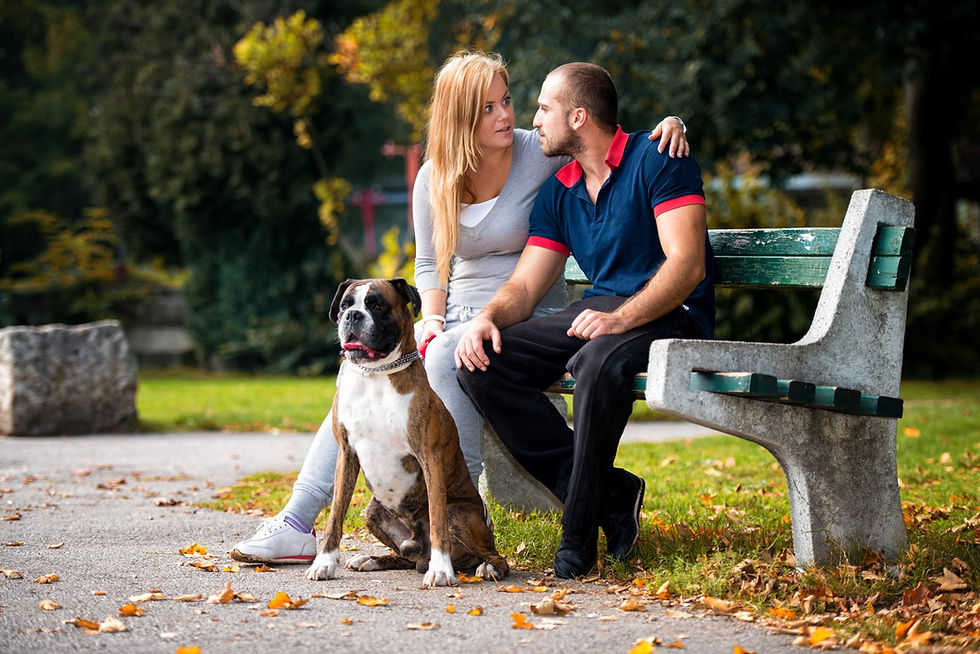
The following from room to room. The waiting outside doors.The need to remain physically near people almost constantly. At first it feels funny. Then one day you realise the dog hasn’t willingly spent time alone for weeks.
That same emotional closeness is exactly what Doggy Styles Inc builds around in its minimalist Boxer tote bags, t-shirts, sweatshirts and hoodies; clean, wearable designs inspired by the real ownership experience rather than cartoon dog stereotypes or novelty graphics.
Because Boxer owners usually recognise the breed instantly in the details: the emotional intensity, the constant involvement, the chaotic affection and the feeling that the dog somehow becomes emotionally invested in absolutely everything happening inside the house.
👉 Shop Boxer tote bags, women’s t-shirts, sweatshirts and hoodies
👉 or explore the full BOXER COLLECTION
Why Boxers struggle with being alone
Some breeds feel naturally independent. Boxers usually don’t. That doesn’t mean they’re incapable of being left alone. Many well-balanced Boxers cope perfectly well with normal daily separation once routine and structure are established properly. But emotionally, the breed often remains far more connected to people than first-time owners expect.

This is where people often misunderstand the breed completely. Because separation anxiety in Boxers rarely begins dramatically. It usually builds quietly:
following behaviour increases
settling alone becomes harder
noise sensitivity increases
barking starts earlier
emotional dependence deepens
overstimulation builds faster
Then one day the dog suddenly struggles the moment somebody leaves the house.
And from the outside it can look like the problem appeared overnight. Usually it didn’t.
It was building in small moments:the Boxer waking the second somebody stood up from the sofa, following one specific family member everywhere, lying outside bathroom doors, lifting its head the moment keys were picked up, refusing to fully relax until everyone was back inside the house again. Those tiny patterns are usually the real beginning.
The problem is often emotional momentum
This is what many owners miss. Boxers don’t just become attached to people.
They become attached to activity, routine and emotional presence itself.
That’s why many Boxers cope badly with abrupt silence after highly stimulating household routines.
Children leave. People go to work. The house suddenly changes emotionally.
And the Boxer often struggles with that shift far more than owners expect.

That’s also why many separation problems actually become overstimulation problems underneath. The dog:
cannot settle
paces
vocalises
reacts to sounds
barks at movement
becomes hyper-alert
Not because the dog is “bad.” Because the nervous system never properly came back down after stimulation built too high.
A Labrador often softens emotionally once the environment calms down. A French Bulldog usually seeks closeness but often without the same physical intensity. A Boxer tends to stay emotionally involved in the atmosphere itself, which is why the breed can feel so unusually “present” inside a household compared to many other companion dogs.
That’s usually the point where owners realise Boxer behaviour and emotional regulation are almost impossible to separate properly.
Most experienced Boxer owners eventually stop trying to simply “tire the dog out” and start focusing instead on helping the dog settle emotionally too.
Why Boxer attachment feels different
Once you’ve lived with the breed long enough, you start recognising something slightly unusual about Boxers compared to many other energetic dogs. Their attachment often feels active rather than passive. A Labrador might happily remain nearby. A German Shepherd often watches protectively. A Boxer feels emotionally invested in your existence itself.

They watch constantly. Follow constantly. React constantly. And honestly, that’s also why people become so emotionally attached to the breed in return. Because the connection rarely feels casual. They don’t simply “live with” people. They participate in them.
That emotional involvement is also why Boxer temperament feels far more layered than people initially expect. Once owners truly understand the breed, they usually realise the Boxer personality is built as much around emotional responsiveness as physical energy. Most experienced Boxer owners eventually discover the breed is far more emotionally sensitive — and far more affected by atmosphere — than people first assume.
Exercise alone usually doesn’t fix it
This surprises a lot of people. Some owners assume separation issues mean:“the dog needs more exercise.” Sometimes that helps. Sometimes it actually makes things worse.
Because highly stimulated Boxers often become emotionally louder, not calmer.
A Boxer that spends hours in heightened excitement without learning calmness properly can come home physically tired but mentally unable to switch off.
That’s why some Boxers become:
destructive
restless
reactive
emotionally demanding
Even after long walks.

What many experienced Boxer owners eventually realise is that calmness has to be practised too. Not just activity. That’s often the point where living with the breed suddenly becomes much easier.
Because once the Boxer learns how to come back down emotionally, the entire household usually changes with it.
That balance between stimulation and regulation is also why Boxer exercise needs are far more nuanced than people expect initially. Most owners eventually realise the issue was never simply “too much energy.” It was energy without enough emotional direction.
It’s all connected
Once you understand the breed properly, most Boxer behaviour starts connecting back to the same emotional system underneath:
attachment
stimulation
regulation
routine
involvement
The barking. The destructiveness. The inability to settle. The clinginess. The “velcro dog” behaviour. It’s usually all connected. And honestly, that’s why Boxers often thrive in households where people genuinely enjoy involvement from a dog rather than simply wanting calm background companionship.
Without enough engagement, structure and emotional rhythm, the same personality that feels affectionate at first can eventually start feeling overwhelming. Most people don’t fully appreciate that until they’ve lived with the breed properly for a while.
The people who thrive with Boxers are usually the people who stop trying to create independence through distance and instead build confidence gradually through routine and predictability instead.
Because once the Boxer understands the household rhythm properly, separation often stops feeling emotionally threatening in the same way.
And it’s also one of the reasons Boxers often become such deeply loved family dogs despite the chaos that sometimes comes with them. The emotional involvement can feel exhausting occasionally — but it’s also exactly what many owners end up loving most about the breed.
Most people expecting an “easy dog” probably won’t fully understand that dynamic.
The people who adore Boxers usually do.
The version people don’t expect
Because despite all of this, most Boxer owners still wouldn’t choose a more independent dog afterwards. Not really. They complain about:
the clinginess
the following
the emotional dependency
the inability to pee alone ever again
Then immediately describe the dog like a child five minutes later.

And honestly, that probably explains the breed better than anything else. Because once the bond forms properly, the attachment stops feeling like behaviour and starts feeling more like relationship. Eventually many Boxer owners realise the dog was never trying to control the household. It was trying to stay emotionally connected to it.
The hard truth
Yes, Boxers can be left alone.
But most cope best when:
exercise is balanced properly
stimulation is managed
calmness is taught
routine is predictable
emotional regulation exists alongside physical activity
Without those things, separation problems can escalate surprisingly quickly. With them, most Boxers become far more balanced and emotionally secure than people initially expect.
Boxer Lifestyle
Living with a Boxer means attachment, involvement, emotional chaos and a dog that somehow manages to become physically present in almost every part of everyday life.
For the right person, that becomes the appeal.
That’s the energy behind the Boxer range — minimalist apparel designed around the real ownership experience rather than idealised dog stereotypes.
👉 Explore Boxer unisex t-shirts, sweatshirts and hoodies and tote bags
👉 or shop the full BOXER COLLECTION
Got a Boxer who does the full-body wiggle every time you walk in? Show us. Tag @doggystylesinc on Instagram or find us on Facebook at Doggy Styles Inc, and your dog could feature in a future post.
Final Verdict
Boxers can absolutely learn to be left alone successfully. But emotionally, they are far more attachment-driven than many people initially expect. That’s usually the real issue underneath separation problems.
Final Thought
Most Boxer owners eventually realise the breed never really wanted independence.
It wanted involvement.
Continue Understanding the Boxer Breed
If you’re still understanding how Boxer behaviour and ownership actually work in real life, these articles connect most closely to the patterns above:
FAQ — Boxer Separation Anxiety & Being Left Alone
Can Boxers be left alone?
Yes, but most Boxers cope best with predictable routine, emotional regulation and gradual independence training.
Do Boxers get separation anxiety?
Yes. Boxers are highly attachment-driven dogs and can be prone to separation anxiety if emotional dependence becomes too strong.
Why does my Boxer panic when I leave?
Many Boxers become emotionally overstimulated by sudden household changes and struggle when routine, presence or activity disappears abruptly.
Why does my Boxer follow me everywhere?
Boxers are highly emotionally engaged dogs that often become deeply attached to household routine and human presence.
Do Boxers choose a favourite person?
Many do. Boxers often form especially intense emotional attachment to one individual inside the household.
Are Boxers clingy dogs?
Many are. Boxer attachment often feels unusually intense compared to more independent breeds.
Why does my Boxer bark when left alone?
Barking is often linked to overstimulation, emotional build-up, anxiety or difficulty settling rather than simple disobedience.
Does exercise fix Boxer separation anxiety?
Not always. Emotional regulation and calmness are often just as important as physical exercise.
Can Boxers learn independence?
Yes, although confidence and calmness usually need to be built gradually through routine and structure.
Are Boxers good for people who work long hours?
Usually not ideal unless proper support, stimulation and routine are provided consistently.
Why are Boxers so attached to their owners?
The breed was developed to be emotionally engaged, alert and physically involved with people, which creates strong attachment behaviour.
Do Boxers calm down with age?
Most mature emotionally over time, although structure and consistency matter more than age alone.
Are Boxers emotionally sensitive dogs?
Yes. Many Boxers respond strongly to household atmosphere, stimulation and emotional tension around them.

Comments